
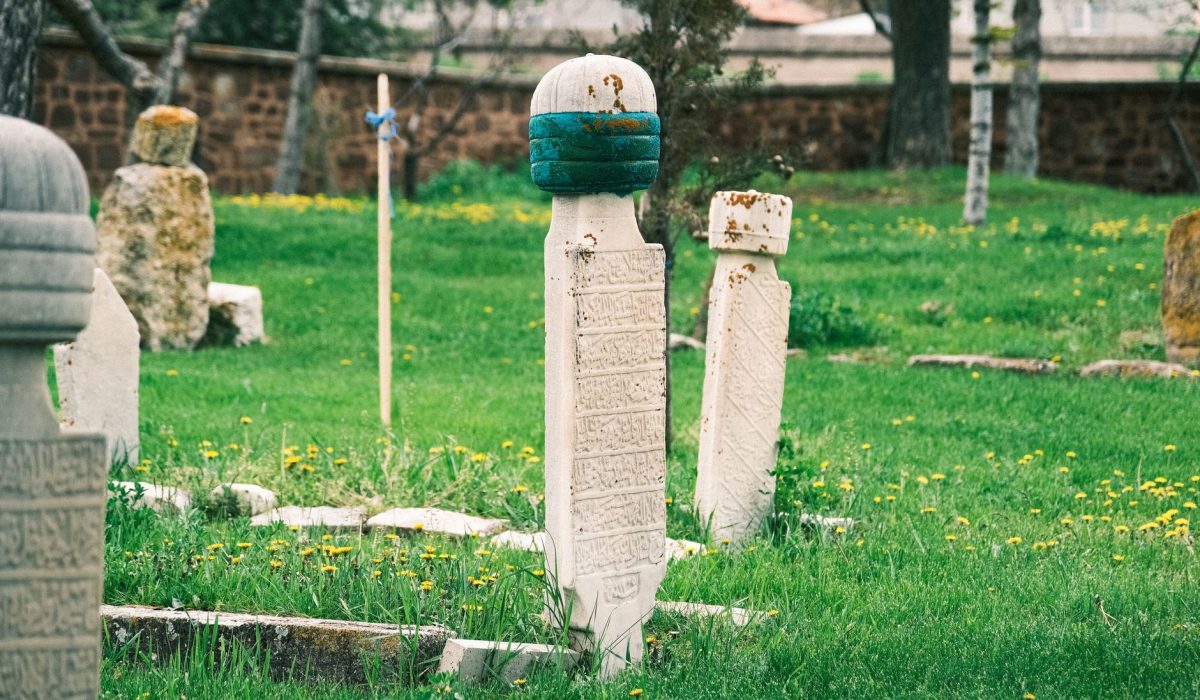
The phrase that looks perfect in a list of memorial sayings may feel wrong when you place it beneath a familiar name. It might be too formal, too religious, or simply unlike anything your family would say. That reaction is useful. It means you are beginning to recognize the voice the inscription needs.
Writing for a headstone is different from writing an obituary. You have limited space, and the words will be read without the surrounding story. A good inscription can offer a small, recognizable glimpse of a person while leaving the fuller account to photographs, conversations, and family records.
You do not need to be a poet to write one. Begin with accurate names and dates, collect a few plain thoughts, and give yourself permission to shorten them. The most useful question is whether the words still feel true when you read them slowly, on their own, beneath the person’s name.
Separate the factual lines from the personal message
Start with a simple text document containing the proposed name and dates. Do not add decorative fonts or a border yet. This makes it easier to check the information before appearance influences your judgment.
Decide how the name should be presented. A full name may be important for identification, while a familiar nickname may make the memorial feel more personal. If both are used, ask the designer to establish a clear reading order instead of giving every word equal visual weight.
Check spelling from reliable records and discuss any differences with the family. A person may have used a preferred name that differs from a formal document. The aim is to make an intentional choice, with the cemetery’s requirements understood, rather than allow an inconsistency to slip into the proof unnoticed.
Review the dates separately. Choose a format that will be clear to expected readers, particularly if family members use different conventions for numeric dates. Writing out the month can remove ambiguity. Once the factual lines are settled, keep them stable while experimenting with the personal wording.
Collect memories before searching for quotations
Ask a few people a specific question: “What is one ordinary thing you remember about them?” Answers may include a habit, a favorite place, a familiar expression, or the way they made people feel welcome. These details can suggest language that belongs to your family.
Write the answers down without trying to turn them immediately into an epitaph. “She always had room at the table” carries a different kind of information from “beloved mother.” Both may be meaningful, but the first gives you a more particular starting point.
You can also ask what the person would have disliked. Someone who spoke plainly might have found elaborate language uncomfortable. A private person might not have wanted an inscription listing every achievement. Remembering those preferences can narrow the choices without judging anyone else’s style.
Avoid treating every memory as something that must appear on the stone. This early collection is a way to find a direction. The stories that do not become part of the inscription can still be saved in a family document or read at a gathering.
Draft a sentence in ordinary language
Try writing what you would say to a relative who asked what mattered about the person. For example: “He made time to listen, even when he had a lot to do.” That sentence is not yet a finished inscription, but it contains a clear idea.
You could shorten it to a line about listening or kindness, or decide that the original thought belongs in a longer remembrance. The purpose of the exercise is to identify meaning before searching for polished language.
Here are a few original starting points that families can adapt to their own circumstances:
- Your laughter is part of our home
- You made room for everyone
- We remember the kindness in ordinary days
- Loved in the little things every day
- Your stories stay around our table
These lines are suggestions, not descriptions of a particular person. Use one only if it fits. A familiar family expression may be more appropriate than any example, provided its meaning remains understandable in the setting and the people closest to the person are comfortable with it.
Let the available space improve the writing
An inscription does not become more meaningful simply because it is longer. A shorter line can be easier to read and leave the name with the visual emphasis it deserves. Editing is part of giving each word enough room.
If you are comparing Upright Headstones, look at the usable inscription area rather than the outer dimensions alone. Borders, portraits, and separate name panels all affect the space available for an epitaph. Ask the designer to show the actual wording at a proposed lettering size.
Read the sentence aloud and remove words that do not change its meaning. “You will always and forever remain deeply loved by all of us” contains several overlapping ideas. A family might prefer the simpler “Always loved,” or decide that a more specific thought would say something the shorter phrase cannot.
Do not shorten a name or change a meaningful phrase solely to preserve a decorative feature. Try adjusting the layout first. The personal information should guide the design, and the designer should explain the compromises before the family approves them.
Choose quotations with care
A quotation can connect a memorial to a person’s faith, favorite book, or familiar saying. Before using one, verify the exact wording and attribution from a reliable edition or original source. Online quote graphics can repeat errors, and a familiar sentence may have several versions.
Discuss whether an attribution belongs on the stone. It takes space and may be important to the family, particularly if the quotation could otherwise be mistaken for the person’s own words. Ask the maker to show both versions if the decision is uncertain.
For religious wording, consult someone who understands the family’s tradition and the specific text. Small changes can alter meaning. A translation that sounds graceful in English may not be the version the person used or the one relatives recognize.
If a proposed line comes from a modern song, poem, or other copyrighted work, ask the publisher or rights holder about any permission needed for the intended use. Choosing your own words can also avoid uncertainty while making the inscription more personal. Do not assume that finding a quotation online settles its attribution or reuse conditions.
Review more than the words in a bilingual inscription
When a memorial includes two languages, arrange for a fluent reader to review each one in the final layout. A correct translation in a separate email does not guarantee correct punctuation, character shapes, or line breaks in the design file.
Tell the maker which language should appear first and whether the two versions should have equal emphasis. The decision may reflect the person’s life, the relatives who will visit, or the importance of preserving a language for younger generations.
Ask to see examples of the supplier’s work in the relevant script. Confirm that the selected lettering method can reproduce the characters clearly at the intended size. Do not replace a missing character with an approximate symbol just because the font preview lacks it.
Names may also need a separate discussion. A transliterated name can have several accepted spellings, and relatives may recognize different versions. Record the chosen form and have the appropriate family member approve it directly. Translation software alone should not be the final reviewer of words being permanently engraved.
Give disagreement a specific question to answer
Families can become stuck when one person wants a traditional phrase and another wants something more personal. Instead of comparing complete inscriptions repeatedly, identify the actual point of disagreement. Is it religious language, formality, length, or who is mentioned?
You may be able to preserve a shared idea with different wording. If everyone wants to recognize generosity, the group can compare two short lines expressing that quality. A focused choice is easier than asking several people to select from a page of unrelated quotations.
Avoid using the inscription to settle an old family dispute or determine whose relationship mattered most. Listing some relatives and omitting others can carry implications beyond the available space. Consider whether a broader expression would be more appropriate, or whether names belong in a separate family record.
If no phrase feels right, pause the epitaph decision. The name and dates can still anchor the design discussion. Ask the supplier what can remain undecided and until when. Silence on a proof does not need to be filled immediately with a sentence nobody truly wants.
Proofread for sound and then for accuracy
Make two final readings. In the first, read the inscription as a visitor would. Does the language sound natural? Does the meaning remain clear without an explanation? Does an unexpected line break make a phrase awkward?
In the second, check every character against the approved text. Review punctuation, accents, capitalization, and dates. Look for repeated words and missing small words. Familiarity makes these errors easy to overlook, so ask someone who has not been involved in every revision to read the final version too.
Confirm that the approved wording appears in the full monument proof, not only in a separate text message. Save that proof and the written approval. If a revision is made afterward, request a new complete version and check it again.
An inscription is ready when it is accurate, readable, and recognizable to the people who chose it. It does not have to explain everything that was loved about someone. A few words that sound like your family can be enough to bring the rest of the memories to mind.